The Gut-Liver-Kidney Axis: Preventing Dysfunction with Functional Care

Hello, I am Julie Donaldson and I am a clinical nutritionist with functional health training. I specialize in restoring balance in complex, chronic and acute health conditions. I welcome you to peruse other articles that may be of interest to you in your health investigation!
“When Julie and I first started to work together, I honestly could be reactive to talking about what was “really” going on...because there were other “simpler” ideas online. I wanted my problems to be simpler, but they weren’t and neither were the solutions. I learned in due time that the way she approaches things is right. And it works. Taking the shortcut might be the American way, but it’s not necessarily the right way. It takes some time to slow down, listen and learn.”
Your gut and liver keep you afloat in all efforts to purify the body. There may be no more important connection to all of the body’s health than that of the gut. With recent news/research indicating that Parkinson’s Disease likely begins in the kidneys and not in the brain as previously thought, it is a key topic around which to highlight this important fact: all health begins in the gut, and the clearance of toxins by the gut and liver is what prevents the kidneys from becoming compromised. I am frequently cautioning clients that the gut & liver need to be protected at all costs - because when the stresses get passed to the kidneys and damage begins to occur there, it’s much harder to resolve. Kidneys don’t regenerate as easily as some other body organs. And this is the lesson being learned around Parkinson’s - a very serious degenerative disease with no cure. The damage often accumulates silently, and by the time symptoms show up, it’s too late. So, let’s get behind that holistic health lens and see how the gut & liver are cooperating and how they can spare us some treacherous dysfunction when cared for properly.
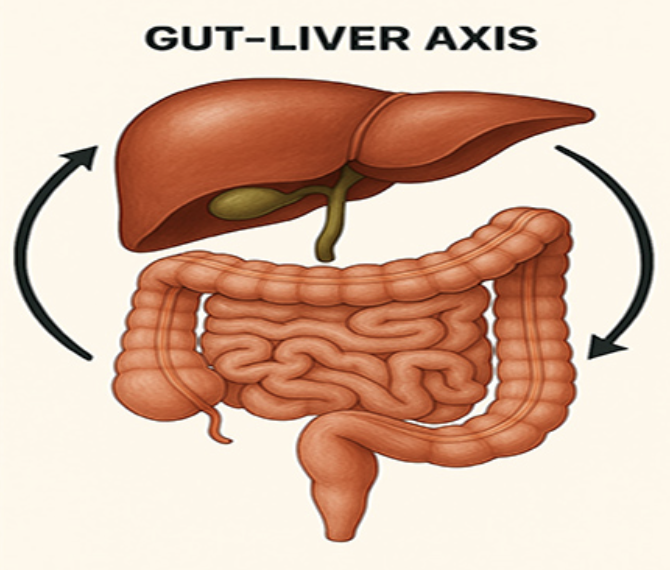
Gut-liver axis - what happens to one organ affects the other
The gut-liver axis is of highest priority
Intestinal health affects all aspects of gut–liver interactions, from the intestinal epithelium, to the intestinal barrier, the liver sinusoids, and back to the gut via the biliary tree and the systemic circulation. In a healthy state, the gut microbiota is contained within the gut lumen, but its metabolites act locally and systemically to maintain homeostasis of the gut–liver axis. Disruption of the homeostasis at any of these interfaces can contribute to liver stress and/or disease.
The gut and the liver are charged with first-pass clearance of toxic compounds in the body. They are the most important organs to receive functional attention for this critical task. Let’s cover the basic mechanisms of how they cooperate to achieve cleansing of the body.
The gut and liver interact via several pathways. The 1st is in their anatomical connection — venous blood from the small and large intestines drains into the portal vein, which provides 75% of the liver’s blood supply. Next, the gut & liver interact via the microbiota — the liver is the first organ to receive absorbed nutrients and microbial metabolites (such as short chain fatty acids, SCFAs) from the gut. The liver, in turn, regulates the gut by secreting bile which contains bile acids, immunoglobulin A (a key antibody (protein) produced by the immune system to fight infections, predominantly protecting mucosal surfaces like the respiratory and gastrointestinal tracts), bicarbonate and antimicrobial molecules directly into the small intestine. The small intestine then completes the cycle by modulating the microbiota.
Bile acids have multiple functions, such as facilitating the digestion and absorption of lipids and lipid-soluble vitamins. Bile acids exert bacteriostatic effects both directly via their detergent properties and indirectly via activation of the bile acid receptor farnesoid X receptor (FXR) to stimulate the production of antimicrobial molecules in intestinal epithelial cells and maintain the gut vascular barrier.
This leads us to the 2nd pathway that is critical to this partnership, and that involves the intestinal barrier. The walls of the intestine are sealed by tight junctions. The health and integrity of these junctions prevent particles and unhealthy bacteria from leaking into the body via the bloodstream. This is commonly referred to as leaky gut. In addition to a failure of bile production, it is caused by unresolved pathogens, toxins, inflammatory responses, and in many cases, by unhealthy responses to gluten and glyphosate. Gut dysbiosis induces intestinal inflammation, which contributes to intestinal barrier dysfunction as well. Leaky gut causes a cascade of dysfunctional responses in the body.
The 3rd route of communication between the gut and the liver is in our systemic blood circulation, through which metabolites and inflammatory mediators derived from the liver reach the gut via the arterial blood supply.
Through all of these pathways, the gut and liver have a multidirectional interaction that is vital for both organs as well as their roles in stabilizing and detoxifying the entire body..
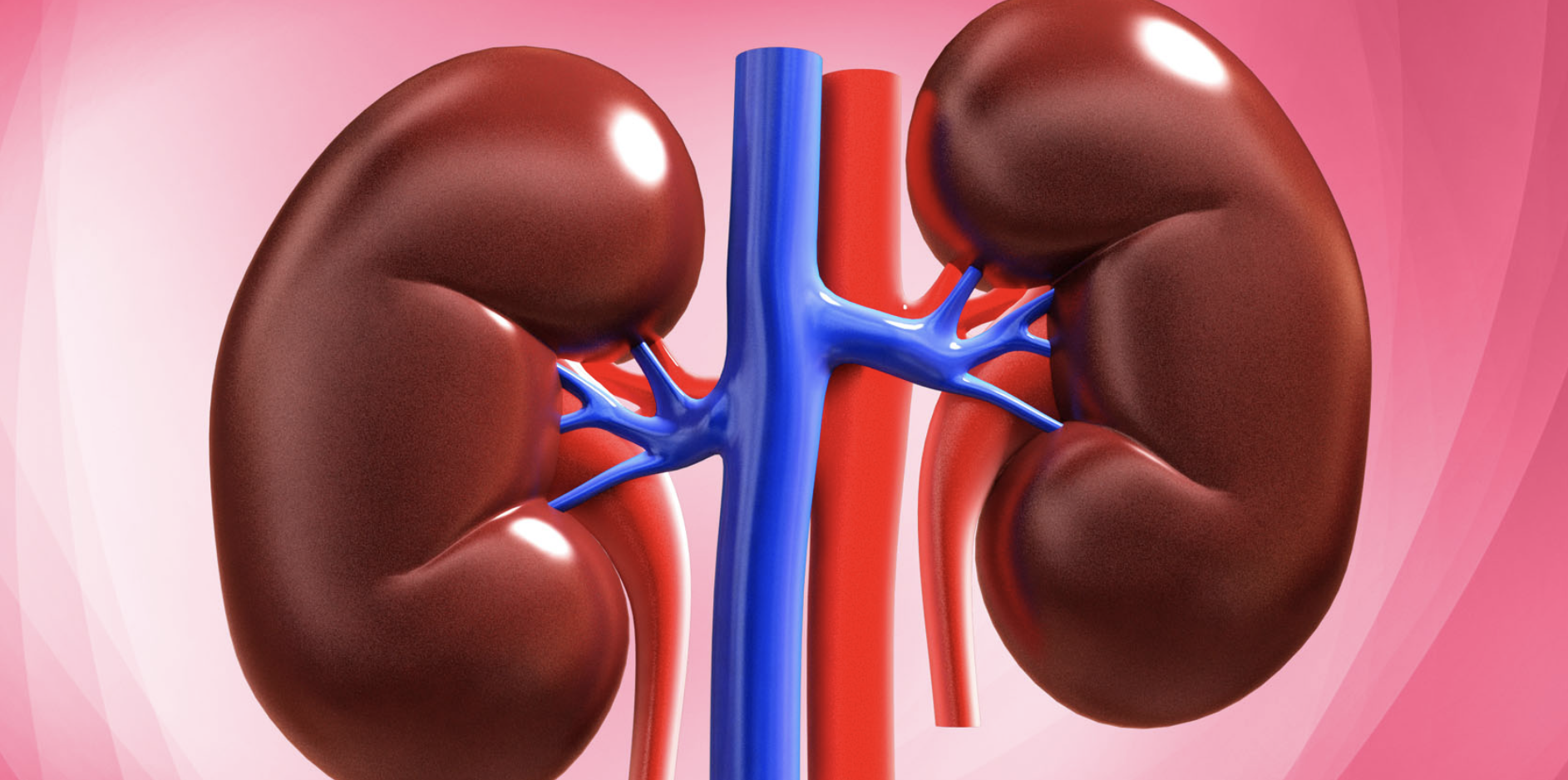
Kidneys
The gut-kidney axis
Now let’s cover how this relationship between the gut & liver impacts the kidneys. As mentioned before, when stress accumulates in the cleansing requirements of the gut & liver, it then spills over into the kidneys. The most significant problem with this development is that it takes a good long while and a number of stresses before this happens - and often, this is a silent process that is difficult for the individual to perceive. Because the kidneys are the final stop for filtration of foreign materials and toxins in the body, they will absorb the pressure of failed gut and liver functions.
The gut-kidney relationship begins with (1) a dependence upon a sealed, non-leaky gut. With a leaky gut, as stated previously, there is chronic inflammation. Chronic inflammation makes it both harder for the kidneys to process foreign particles as well as the toxins it is faced with daily. The relationship continues with (2) imbalance in the microbiome results in greater levels of uremic toxin development. High levels of uremic toxins have been linked to inflammation, oxidative stress, and the progression of kidney disease. Research indicates that reducing the production of these toxins through a healthier gut microbiome can help slow the progression of kidney damage; (3) Your gut bacteria also play a role in regulating blood pressure, which is a major factor in kidney health. Specific microbes produce short-chain fatty acids which regulate the expansion and contraction of blood vessels. When the microbiome is out of balance, it can lead to higher blood pressure levels. Over time, uncontrolled hypertension can damage the blood vessels in the kidneys, reducing their ability to function properly.
Just as in the gut-liver axis, the kidney-gut relationship is reciprocal as well. When the kidneys are not functioning properly, waste products can build up in the body. These toxins can alter the microbiome, encouraging the growth of harmful bacteria and reducing the number of beneficial ones.
Because the kidneys are responsible for filtering blood, they are the primary destination and "dumping ground" for toxins, heavy metals, and metabolic waste. When high levels of toxins (such as uremic toxins, industrial chemicals, or excessive phosphates) accumulate in the bloodstream, they damage the kidneys directly through several mechanisms - including cellular, mitochondrial, and structural destruction.
Research has revealed that gut dysbiosis-induced metabolic toxins, circulated via portal circulation and systemic inflammatory responses, drive liver lipid metabolism dysregulation and kidney fibrosis progression. The gut-liver-kidney axis is expected to become a frontier in metabolic and chronic inflammatory disease research, providing a theoretical basis for explaining the synergistic progression of multi-organ pathologies.
Some toxins do not break down into forms that can be excreted through the urine - this is where the gut and liver partnership is critical. Many toxic substances require methylation in order to pass through the kidneys and urine. This must occur in the gut-liver partnership and prior to their arrival in the kidneys. If unsuccessful in the prior steps, these substances will accumulate in kidney tissues and initiate the cellular destruction noted above.
Unfortunately, we are now exposed to such a high toxic load in the modern world that loss of function with aging is considered “normal.” A 90-year-old has only one-third to one-half of the kidney function of a 20-year-old. This means a significant decrease in ability to rid the body of many toxins and helps explain why almost people become sicker with aging. Clearly, “normal” is not healthy.
Another startilng report from a study in 2025 is that people living within a mile of a golf course utilizing pesticides on its turf were a whopping 126% more likely to develop Parkinson’s disease than those living miles from a golf course. Pollutant exposures were both airborne and via pesticide-contaminated ground water making its way into municipal drinking water. Other research shows notable increases in the alpha-synucliein proteins that are associated with Parkinson’s with pesticide exposure. This speaks volumes about the burden of toxins and our initial focus that this disease begins in the kidneys.
The gut-liver-kidney axis is a self-perpetuating loop - and this can be tilted towards high and effective function or dysfunction.
Summations and solutions
Serious disease development is likely when the gut-liver-kidney relationships are compromised. Noted specifically is that the initiation of Parkinson’s disease is now understood to be in the kidneys, not in the brain.
The kidneys are dependent upon the gut & liver for proper detoxification and prevention of chronic inflammation. The gut-liver-kidney axis is expected to become a frontier in metabolic and chronic inflammatory disease research, providing a theoretical basis for explaining the synergistic progression of multi-organ pathologies.
Functional health assessment on all levels is the best prevention for disease. Specific focus on blood chemistry for liver & kidney patterns as well as high quality stool testing applies in every case as we look to the gut-liver axis in particular to provide a healthy foundation and prevent cellular damage to the kidneys.
Supporting the body with personalized nutrition is the beginning point for functional health care. These processes optimize your ATP production which is vital to all energy expenditures in the body.
Creation of personalized protocols based upon test results is key. There are no effective one-size-fits all approaches in health care. Your results determine your protocol needs.
Contact me at Julie@truenaturehealthconsulting.com for more information and personalized care. We provide holistic telehealth services.